

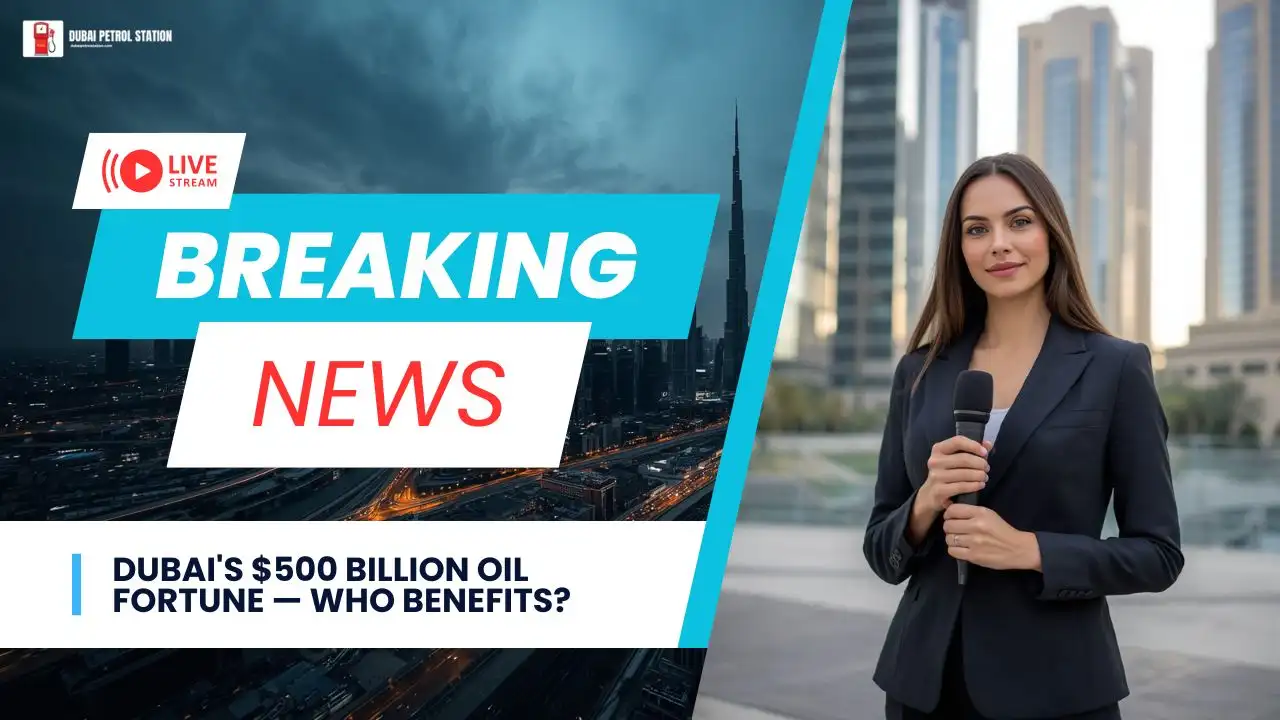
Dubai’s skyline of skyscrapers, luxury developments, and global business hubs often creates the impression of a city built entirely on oil. Yet behind the modern image lies a more complex story: a limited but valuable Dubai oil fortune that helped finance the foundations of one of the world’s fastest-growing economies.
The frequently cited $500 billion figure refers to estimates of the broader value created from UAE hydrocarbon reserves, accumulated state wealth, and long-term energy revenues rather than a single Dubai oil fund. Dubai’s share of the UAE’s oil reserves is much smaller than neighbouring Abu Dhabi’s, but early oil income played a crucial role in building infrastructure and launching its global transformation.
This raises the central question: who actually benefits from UAE oil wealth? The answer involves government spending, Emirati citizens, businesses, foreign workers, and a wider Dubai investment strategy designed to reduce dependence on oil.
Historical Context: How Oil Changed Dubai’s Economic Path
Before oil, Dubai’s economy depended largely on pearling, fishing, trading, and maritime activity. The discovery of offshore oil at the Fateh field in 1966 changed the emirate’s financial position, with production beginning in 1969.
Unlike some oil-producing states that relied heavily on petroleum exports for decades, Dubai’s leadership used early oil revenues to build infrastructure. Roads, ports, airports, and public services became priorities. These investments supported Dubai’s later rise as a commercial centre rather than leaving it dependent on crude exports alone.
The strategy was simple: use oil money as seed capital for a broader Dubai economic model based on trade, tourism, finance, real estate, and logistics.
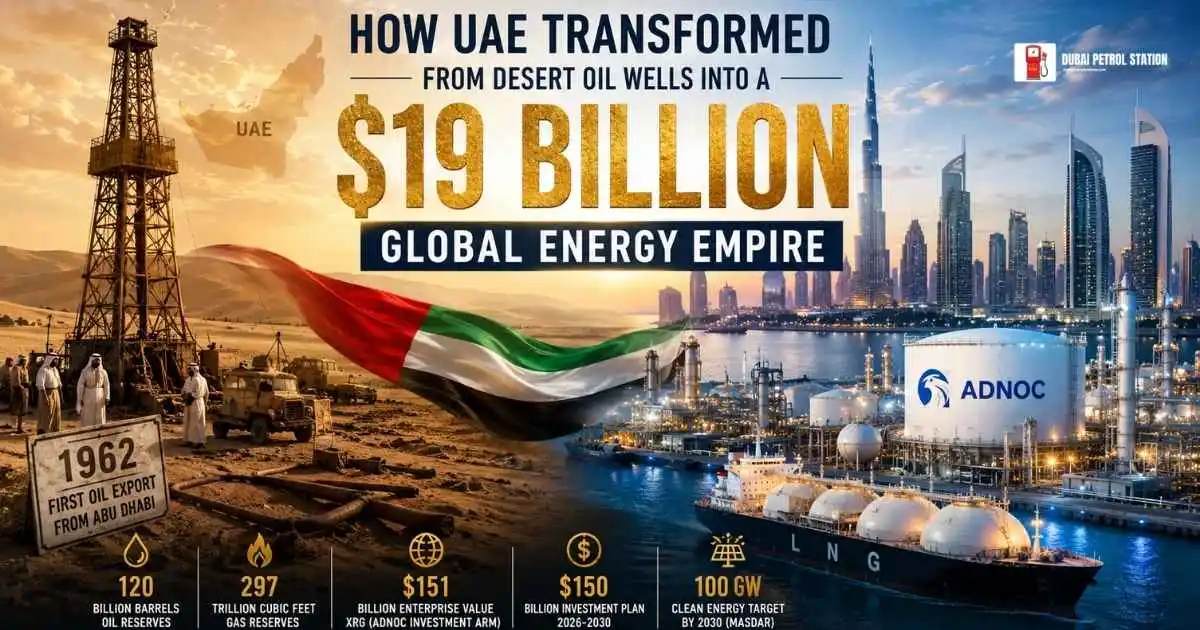
You might love this Dubai Oil Globalisation 2026: How UAE Built a $19 Billion Energy Empire from Desert Wells
Current Revenue Distribution: Where Does Dubai’s Oil Money Go?
Oil revenues in the UAE are managed through a network of government institutions and investment entities. While Abu Dhabi controls the majority of the country’s hydrocarbon resources, Dubai’s government has historically channelled resources into strategic sectors and state-linked investments.
Major areas benefiting from energy wealth include:
| Sector | How Oil Wealth Supports It |
|---|---|
| Infrastructure | Roads, airports, ports, utilities, and urban development |
| Real Estate | Government-backed development projects and investment zones |
| Tourism | Airports, attractions, hospitality infrastructure |
| Finance | Development of Dubai as a regional financial centre |
| Technology | Innovation programs and future economy initiatives |
| Logistics | Expansion of global trade connections |
At the federal level, institutions such as Abu Dhabi Investment Authority and Mubadala Investment Company manage large pools of national capital, investing across global markets and strategic industries. Dubai also operates its own investment vehicles to support economic growth.
The broader Gulf oil revenue distribution model means oil income is not simply handed out directly; it is often transformed into infrastructure, government services, and investment assets.
Who Benefits From Dubai’s Oil Wealth?
Benefits for Emirati Citizens
Emirati citizens are the group most directly connected to state-funded benefits. The UAE’s citizens, known as Emiratis, receive access to government-supported programs that are financed partly through national wealth.
Key benefits include:
- Government employment opportunities
- Housing support programs
- Education and healthcare services
- Social welfare initiatives
- Public infrastructure funded by state budgets
A major feature of the UAE system is the distinction between citizens and expatriates. Emiratis represent a minority of Dubai’s population, while expatriates make up a large share of residents.
Benefits for Businesses and Expats
Foreign residents and international companies benefit differently. Expatriates, meaning foreign workers living in the UAE, generally do not receive the same citizen-focused welfare benefits but benefit from Dubai’s economic environment.
Key advantages include:
- Access to global business networks
- Employment opportunities
- Modern transport and infrastructure
- Free zones and investor-friendly regulations
- A growing service and technology economy
For many residents, oil wealth is experienced indirectly through the city itself rather than direct payments.
A typical Dubai resident may start the day on a well-maintained highway, travel through a modern metro system, work in an international business district, and spend evenings in a city shaped by decades of infrastructure investment. The benefits appear through convenience, connectivity, and economic opportunity. However, debates continue about housing costs, wealth concentration, and differences between citizens and non-citizens.
Must Read: Carbon Capture Technology in UAE Oil Industry: ADNOC’s Path to Net Zero by 2045
Dubai’s Investment Strategy Beyond Oil: Diversification or Concentration?
Dubai’s long-term strategy has been to convert oil income into a diversified economy. Today, sectors such as tourism, aviation, trade, finance, and real estate are central to the emirate’s growth.
The UAE economy diversification strategy has helped reduce reliance on hydrocarbons. The country’s non-oil sectors now represent the majority of economic activity, reflecting decades of investment into alternative industries.
However, diversification has also created new debates. While Dubai has generated opportunities for investors and professionals worldwide, some wealth has become concentrated among property owners, large corporations, and high-net-worth individuals.
| Investment Area | Impact on Dubai |
|---|---|
| Tourism | Created millions of hospitality and service opportunities |
| Real Estate | Increased global investment but raised affordability concerns |
| Finance | Strengthened Dubai as a regional capital hub |
| Logistics | Connected Gulf markets with global trade routes |
| Technology | Supported future-focused industries |
Dubai Oil Wealth Compared With Other Gulf States
| Gulf State | Oil Resource Position | Economic Approach |
|---|---|---|
| UAE (Abu Dhabi-led) | Among the world’s largest reserves | Oil investment + diversification |
| Saudi Arabia | Largest regional producer | Oil income + Vision 2030 reforms |
| Qatar | Major gas producer | Energy exports + global investments |
| Kuwait | Large oil reserves | Sovereign wealth-based model |
| Dubai | Smaller oil reserves | Trade, tourism, finance, real estate |
Dubai’s unique position is that it transformed a smaller oil base into a global commercial economy.
FAQs
-
How much oil does Dubai have left?
Dubai has far smaller reserves than Abu Dhabi. Its remaining oil resources are limited compared with other Gulf producers, which is why diversification became a priority.
-
What percentage of Dubai’s GDP comes from oil?
Oil represents only a small portion of Dubai’s economy today. Trade, tourism, finance, real estate, and services contribute much larger shares.
-
How do oil revenues affect the cost of living in Dubai?
Oil-funded infrastructure improves quality of life, but housing, education, and lifestyle costs are influenced more by demand, property markets, and global investment flows.
-
What happens when Dubai’s oil runs out?
Dubai has already been preparing for a post-oil future through diversification into tourism, finance, logistics, and technology.
-
How transparent is oil revenue distribution?
The UAE publishes some financial and economic information, but detailed breakdowns of all state investment flows are not always publicly available.
Conclusion
Dubai’s $500 billion oil fortune is not simply a pile of money divided among residents. It became the foundation for infrastructure, government services, and a global investment strategy. Emirati citizens benefit most directly through state-supported programs, while expatriates and businesses benefit through Dubai’s opportunities and economic environment.
The future of the Dubai economic model depends less on oil production and more on whether diversification continues to create broad-based growth. Dubai’s next chapter will be measured not by how much oil it owns, but by how effectively it converts past energy wealth into a sustainable future.
Humanize 105 words

Leave a Reply