

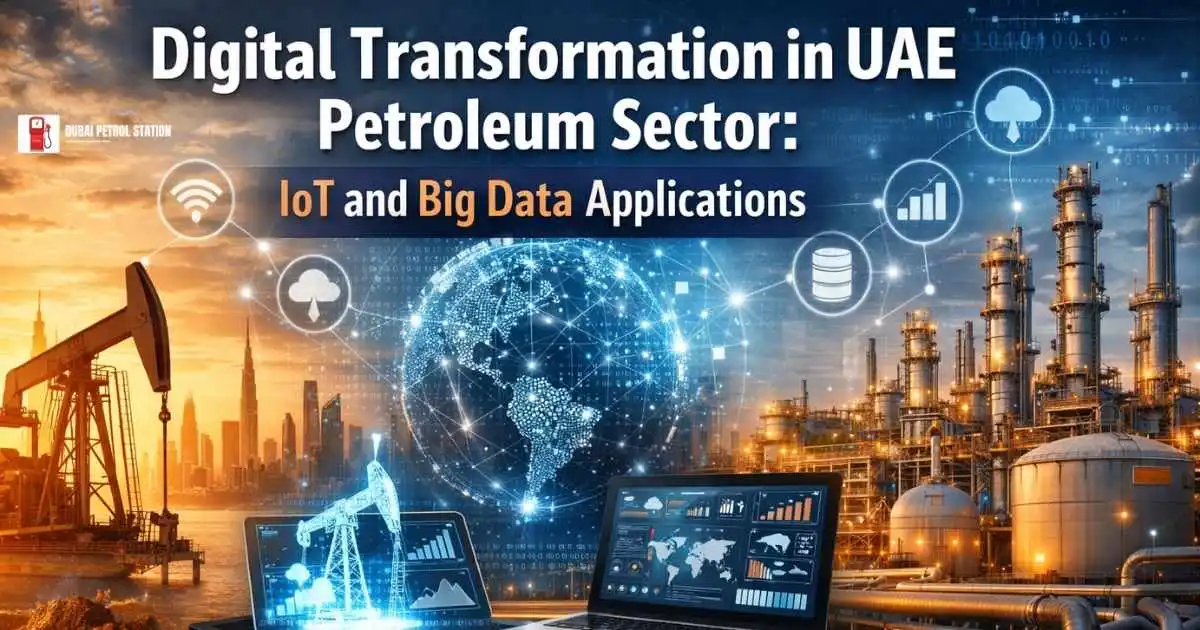
Digital Transformation in UAE Petroleum Sector: The United Arab Emirates has long been recognized as a global leader in energy innovation. As of 2026, the country’s petroleum sector is undergoing a significant transformation powered by digital technologies such as the Internet of Things (IoT), Big Data analytics, artificial intelligence, and cloud computing.
Leading companies like Abu Dhabi National Oil Company and organizations such as Dubai Petroleum are investing heavily in digital oilfield technologies to increase efficiency, improve safety, and reduce operational costs.
From smart sensors embedded in pipelines to advanced analytics predicting equipment failures before they occur, digital transformation is redefining how petroleum operations are managed across the Emirates.
If you are interested in the future of energy or want to understand how technology is reshaping the oil and gas industry in the UAE, this guide explains everything in simple and practical terms. You might love to read Carbon Capture Technology in UAE Oil Industry: ADNOC’s Path to Net Zero by 2045.
Key Highlights
| Technology | Key Application | UAE Impact (2026) | Benefit |
|---|---|---|---|
| IoT Sensors | Predictive Maintenance | Remote well monitoring | 10% uptime boost |
| Big Data AI | Reservoir Analysis | $3.2B market by 2030 | 90% forecast accuracy |
| Edge Computing | Real-time Leak Detection | Pipeline safety | Reduced emissions |
| 5G Integration | Seismic Data Processing | ADNOC pilots | Days vs. months timelines |
What Is Digital Transformation in the Petroleum Industry?
Digital transformation refers to integrating modern digital technologies into traditional industrial operations to improve productivity, efficiency, and decision-making.
In the petroleum sector, this transformation includes:
Key Technologies Driving the Change
Internet of Things (IoT)
Devices, machines, and sensors connected to the internet that collect and share operational data in real time.
Big Data Analytics
Analyzing massive datasets from drilling sites, pipelines, and refineries to detect patterns and improve decision-making.
Artificial Intelligence (AI)
Computer systems that learn from data and assist engineers in predicting problems and optimizing production.
Cloud Computing
Digital infrastructure that allows petroleum companies to store, access, and analyze data remotely without relying on local servers.
Why Digital Transformation Matters for the UAE
The UAE is among the world’s largest oil producers, with daily production of approximately 4 million barrels of crude oil. With such large-scale operations, even small improvements in efficiency can generate enormous economic benefits.
Digital transformation helps petroleum companies:
- Improve operational efficiency
- Reduce environmental impact
- Prevent costly equipment failures
- Enhance worker safety
- Optimize production levels
It also supports the country’s broader economic strategy under initiatives like the UAE Energy Strategy 2050, which aims to combine traditional energy leadership with advanced technology and sustainability.
IoT Applications in the UAE Petroleum Sector
Smart Sensors Across Oil Infrastructure
Thousands of smart sensors are now deployed across UAE oil fields, pipelines, and refineries. These sensors continuously measure:
- Temperature
- Pressure
- Flow rate
- Equipment vibration
- Chemical composition
By transmitting real-time data to centralized monitoring systems, these sensors enable engineers to detect anomalies instantly.
Key Benefits of IoT Sensors
- Leak detection within seconds instead of days
- Continuous monitoring of equipment health
- Reduced human exposure to hazardous environments
- Automated optimization of energy consumption
Large-scale deployments are especially visible in operations managed by Abu Dhabi National Oil Company, which operates some of the world’s most advanced digital oilfields.
Connected Vehicles and Industrial Equipment
Modern drilling rigs, tankers, and heavy transport vehicles are now equipped with IoT tracking systems. These systems allow operators to monitor:
- Real-time equipment location
- Fuel efficiency
- Engine performance
- Maintenance requirements
This level of connectivity significantly improves logistics coordination and reduces downtime.
Smart Refineries
Refineries in cities such as Abu Dhabi and Dubai increasingly rely on digital control systems to manage thousands of production processes simultaneously.
Automated monitoring systems can:
- Adjust refining temperatures
- Balance chemical reactions
- Optimize fuel yield
- Reduce emissions
These smart systems ensure refineries operate with maximum efficiency and minimal human intervention.
Big Data Analytics: Turning Information Into Insight
Predictive Maintenance
Predictive maintenance is one of the most valuable applications of Big Data in the petroleum industry.
By analyzing sensor data, algorithms can predict when equipment components—such as pumps, compressors, or pipelines—are likely to fail.
Real Industry Results (2026)
Petroleum companies operating in the UAE report:
- 35% reduction in unexpected equipment failures
- 40% decrease in maintenance costs
- 25% improvement in equipment efficiency
This technology prevents sudden shutdowns that could otherwise cost millions of dollars.
Reservoir Management
Big Data analytics also improves how engineers understand underground oil reservoirs.
By analyzing seismic data, drilling history, and geological models, advanced algorithms help companies determine:
- Optimal drilling locations
- Extraction rates
- Pressure management strategies
This leads to higher recovery rates and longer reservoir lifespans.
Supply Chain Optimization
The petroleum supply chain involves multiple complex stages—from extraction to transportation to distribution.
Big Data platforms monitor every step, helping companies:
- Reduce transportation costs
- Improve delivery schedules
- Manage storage inventory
- Respond quickly to global oil market changes
Technology Impact Overview
| Technology | Application | Key Benefit |
|---|---|---|
| IoT Sensors | Pipeline monitoring | Faster leak detection |
| Big Data Analytics | Production optimization | Higher output efficiency |
| AI Systems | Safety monitoring | Reduced operational risks |
| Cloud Platforms | Data sharing | Real-time decision-making |
| Digital Twins | Facility simulation | Lower design and planning costs |
The Human Element: Technology Supports Workers
Despite the rapid rise of automation, human expertise remains essential in the petroleum industry.
Digital systems handle repetitive monitoring tasks, allowing engineers and technicians to focus on:
- Strategic planning
- Problem solving
- Safety management
- Innovation and optimization
Companies are increasingly investing in digital training programs to prepare workers for this new technology-driven environment.
Future Outlook for the UAE Petroleum Sector
The UAE aims to become a global leader in smart energy production. With strong government support and continuous investment, the petroleum industry is expected to become even more digital in the coming years.
Expected Developments by 2028
- Fully autonomous upstream drilling operations
- AI-powered oil trading and price forecasting
- Blockchain-based petroleum supply chains
- Virtual reality training for engineers and technicians
- Digital twin simulations for offshore platforms
These innovations will strengthen the UAE’s position as one of the world’s most technologically advanced energy producers.
FAQs
-
What is digital transformation in the petroleum industry?
Digital transformation involves using technologies like IoT, Big Data analytics, artificial intelligence, and cloud computing to improve petroleum exploration, production, and management processes.
-
How is IoT used in UAE oil fields?
IoT sensors monitor pipelines, equipment, and drilling operations in real time, helping engineers detect problems early and optimize production.
-
Why is Big Data important for petroleum companies?
Big Data enables companies to analyze massive datasets from oil fields and refineries, allowing better predictions, improved efficiency, and smarter business decisions.
-
Is the UAE petroleum sector fully automated?
Not completely. Many operations are automated, but human engineers still oversee critical systems and strategic decision-making.
-
What career opportunities exist in the digital petroleum industry?
Growing demand exists for professionals in areas such as:
Data science
IoT engineering
industrial automation
AI development
petroleum engineering with digital expertise
Conclusion
Digital transformation is fundamentally reshaping the UAE petroleum sector. Through technologies like IoT and Big Data analytics, companies are achieving unprecedented improvements in efficiency, safety, and sustainability.
Organizations such as Abu Dhabi National Oil Company and Dubai Petroleum continue to lead the way in deploying cutting-edge digital technologies across oilfields and refineries.
As the energy industry evolves, digital innovation will play a central role in ensuring that the UAE remains a global leader in oil production while preparing for the future of smart energy.




Leave a Reply