

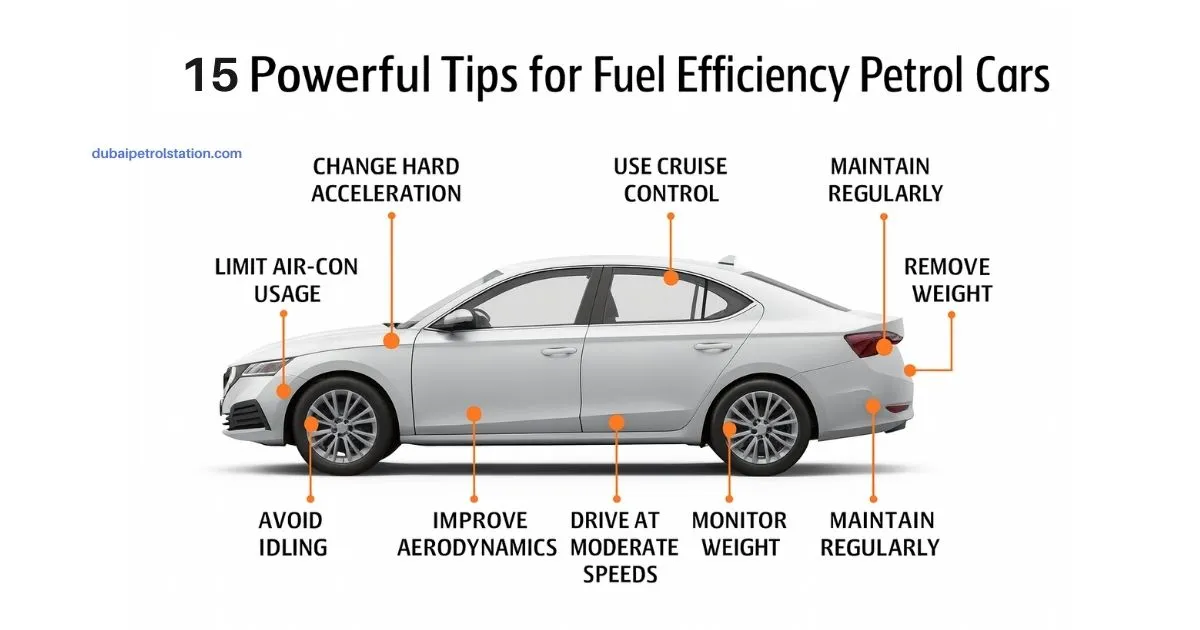
In today’s world, saving fuel is not just about cutting costs — it’s also about reducing environmental impact. For petrol-powered cars, improving fuel efficiency can be a straightforward process if you adopt the right driving habits and maintain your vehicle properly.
In this comprehensive article, you’ll examine and explore an intellectual perception on how you can boost fuel efficiency in petrol cars that indeed save your money in your wallet and make you a smarter driver.
Must Check: Petrol Station Near Me in DubaiWhy Fuel Efficiency Matters
Fuel efficiency reduces costs, cuts emissions, and keeps your engine healthier. The higher your mileage, the less you spend — simple as that.
Maintain Correct Tyre Pressure
Low tyre pressure increases rolling resistance and fuel burn.
- Check tyres weekly
- Follow manufacturer-recommended PSI
- Avoid overinflating
Maintaining proper PSI alone can improve mileage by 1–3%.
Use the Right Grade of Engine Oil
Using “Energy Conserving” engine oil reduces internal friction, helping your engine use less fuel.
Keep Your Air Filter Clean
A dirty filter chokes the engine. Replacing it improves airflow and combustion, giving you a noticeable bump in mileage.
Drive Smoothly (Avoid Hard Acceleration)
Fast acceleration and sudden braking are major fuel wasters. Smooth driving = efficient engines.
Shift Gears at the Right RPM
If you drive a manual petrol car, shift around 2,000–2,500 RPM for best fuel economy.
You May Like: CAFU Fuel Delivery Dubai: The Ultimate Guide to On-Demand RefuelingUse Cruise Control on Highways
Cruise control maintains a steady speed, reducing fuel-hungry fluctuations during long drives.
Avoid Excessive Idling
Idling burns fuel without moving your car. Switch off your engine if waiting longer than 60 seconds.
Reduce Excess Vehicle Weight
Remove unnecessary luggage, tools, or roof racks. Less weight = less fuel consumed.
Improve Aerodynamics
- Keep windows closed at high speeds
- Remove roof bars when unused
- Avoid unnecessary external accessories
Aerodynamic drag increases fuel consumption dramatically above 80 km/h.
Use AC Wisely
Air conditioning strains the engine. Use it sparingly in city traffic, but keep windows up on highways to reduce drag.
Plan Efficient Routes
Shorter distances and fewer stops significantly improve petrol mileage.
Use apps like Google Maps to avoid traffic jams.
Stay Within Optimal Speed Ranges
Most petrol cars achieve peak efficiency at 80–100 km/h. Driving too fast burns much more fuel.
Follow Routine Vehicle Maintenance
Essential checks include:
- Spark plug replacement
- Wheel alignment
- Oil changes
- Air filter cleaning
Neglecting small components hurts long-term mileage.
Track and Improve Your Driving Behavior
Use apps or onboard systems that monitor fuel efficiency, acceleration patterns, and braking habits. Feedback = better driving.
Why These Tips Work
These are not just random tips — each one is backed by research and expert advice:
- The U.S. Department of Energy states that under-inflated tyres reduce gas mileage.
- Informed driving behavior (gentle acceleration, proper gear shifts) is repeatedly highlighted by multiple sources as a major factor in fuel saving.
- Maintenance (air filter, spark plugs, oil) ensures your engine runs efficiently, avoiding waste.
FAQs
-
Does cruise control save fuel?
Yes — on highways, it keeps your speed steady and prevents unnecessary fuel use.
-
Will higher-octane petrol improve my mileage?
Not always. Use only what your manufacturer recommends.
-
Does using AC reduce fuel efficiency?
In city traffic, yes. On highways, open windows create drag, so AC may be more efficient.
Conclusion
Fuel efficiency in petrol-powered cars is not a mystery — it’s a combination of smart driving habits, regular maintenance, and a little strategic thinking. By following these tips, you can stretch every litre of petrol further, save money, and help reduce your environmental footprint. Start small, track your results, and gradually build better driving patterns.




Leave a Reply