

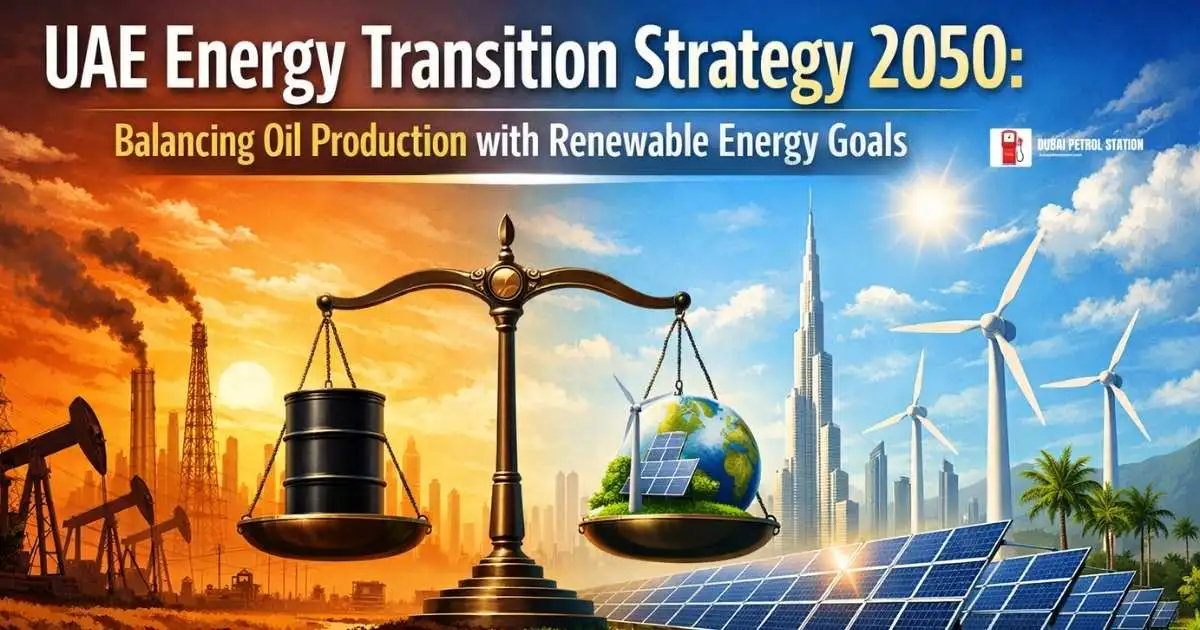
The UAE Energy Transition Strategy 2050 is one of the most ambitious national energy transformation plans in the world. As of 2026, the United Arab Emirates continues to expand its oil production capacity while simultaneously investing billions into renewable energy, hydrogen, and carbon-reduction technologies.
This balanced approach allows the UAE to remain a major global hydrocarbon supplier while preparing for a low-carbon energy future. For energy professionals, investors, and policymakers across Dubai and other Tier-1 energy economies, the UAE model demonstrates how traditional oil producers can transition without sacrificing economic stability.
“Energy transition does not mean abandoning hydrocarbons overnight; it means producing them more efficiently while accelerating cleaner energy systems.” – UAE Energy Policy Perspective
Find the ADNOC Oasis Store Locations Dubai.
Quick Highlights: UAE Energy Strategy 2050
| Topic | Key Point | Relevance |
|---|---|---|
| Energy Mix Goal | 50% clean energy by 2050 | Major long-term national policy target |
| Investment Plan | Over $200 billion planned for energy transition | Supports renewable and low-carbon technologies |
| Oil Production | ADNOC targeting ~5 million barrels/day capacity | Maintains global oil market leadership |
| Solar Expansion | Large-scale projects in Abu Dhabi and Dubai | Reduces carbon footprint and electricity costs |
| Hydrogen Strategy | UAE aiming to become a major hydrogen exporter | Future clean fuel market |
Understanding the UAE Energy Strategy 2050
The UAE Energy Strategy 2050 aims to diversify the country’s energy mix while ensuring long-term energy security and economic growth. The government plans to increase the contribution of renewable and clean energy sources while improving energy efficiency across industries.
Main Goals of the Strategy
- Achieve 50% clean energy in the national energy mix by 2050
- Reduce carbon emissions from power generation by up to 70%
- Invest heavily in solar, nuclear, hydrogen, and carbon capture
- Maintain stable oil production to support global energy demand
As of 2026, the UAE is already making progress through large infrastructure projects and international energy partnerships.
Balancing Oil Production with Renewable Energy
The UAE’s strategy is not about eliminating oil but rather balancing hydrocarbon production with clean energy investments. This approach ensures economic stability while reducing environmental impact.
Continued Investment in Oil & Gas
Companies such as ADNOC are expanding production capacity to approximately 5 million barrels per day by the late 2020s. Oil revenue continues to fund renewable projects and innovation.
Key reasons oil remains important:
- Global demand for oil remains strong
- Oil revenue funds economic diversification
- Advanced technologies reduce emissions from production
- Energy security for international markets
Rapid Growth of Renewable Energy
At the same time, the UAE is building one of the world’s fastest-growing renewable energy portfolios.
Major renewable initiatives include:
- Large-scale solar parks in Dubai and Abu Dhabi
- Expansion of nuclear power through the Barakah Nuclear Plant
- Green hydrogen development projects
- Carbon capture and storage technologies
Dubai’s solar programs and Masdar’s international renewable projects demonstrate how the UAE is positioning itself as a global clean-energy leader.
Key Renewable Energy Projects Driving the Transition
| Project | Energy Type | Impact |
|---|---|---|
| Mohammed bin Rashid Al Maktoum Solar Park | Solar | One of the world’s largest solar parks |
| Barakah Nuclear Power Plant | Nuclear | Provides carbon-free electricity |
| Masdar Renewable Projects | Solar/Wind | Global clean energy investments |
| UAE Hydrogen Strategy | Green/Blue Hydrogen | Future export fuel market |
Long-Tail Energy Transition Keywords Driving Search
For readers researching global energy markets, several important long-tail topics relate to the UAE energy transition:
- UAE energy transition strategy 2050 goals
- Dubai renewable energy projects 2026
- How UAE balances oil production with renewable energy
- ADNOC low-carbon strategy and carbon capture projects
- Future of hydrogen energy in the UAE
These topics reflect the growing global interest in how oil-producing nations manage the shift toward sustainable energy.
Economic and Global Energy Implications
The UAE’s balanced strategy provides a model for other major energy economies such as the United States, Saudi Arabia, Norway, and Canada.
Why the UAE model matters globally:
- Ensures reliable oil supply during the energy transition
- Accelerates investment in renewable technologies
- Supports international climate commitments
- Creates new jobs in both traditional and clean energy sectors
Energy Transition Insight
“The UAE demonstrates that oil producers can lead the energy transition while maintaining economic growth and energy security.”
Frequently Asked Questions (FAQs)
-
What is the UAE Energy Strategy 2050?
A national plan to increase clean energy to 50% of the energy mix and reduce carbon emissions significantly.
-
Will the UAE stop producing oil?
No. Oil production will continue while cleaner energy sources gradually expand.
-
What role does solar energy play in the UAE?
Solar energy is one of the fastest-growing sectors, especially in Dubai and Abu Dhabi.
-
How is the UAE reducing carbon emissions?
Through renewable energy projects, nuclear power, hydrogen initiatives, and carbon capture technology.
-
Why is hydrogen important to the UAE?
Hydrogen is expected to become a major export fuel in the global clean energy economy.
-
Which companies lead the transition?
ADNOC, Masdar, and Dubai Electricity & Water Authority (DEWA) are key players.
Conclusion
The UAE Energy Strategy 2050 represents a pragmatic approach to the global energy transition. Instead of abandoning hydrocarbons, the UAE is leveraging oil revenues to accelerate renewable energy investments, hydrogen development, and advanced low-carbon technologies.
As of 2026, the country continues to balance its role as a major oil exporter with its ambition to become a global leader in clean energy innovation. For energy markets worldwide, the UAE provides a compelling blueprint for managing the complex shift toward a sustainable energy future.


Leave a Reply