


Carbon Capture Technology in UAE Oil Industry: ADNOC is leading the UAE’s charge in carbon capture amid the global push for sustainability in oil and gas. As of 2026, their efforts are ramping up to hit net zero Scope 1 and 2 emissions by 2045.
Leading this transition is ADNOC (Abu Dhabi National Oil Company), which has committed to achieving net-zero emissions from its operations by 2045. Carbon Capture, Utilization, and Storage (CCUS) is at the heart of this plan, helping the UAE’s oil sector reduce emissions while continuing to provide reliable energy to global markets.
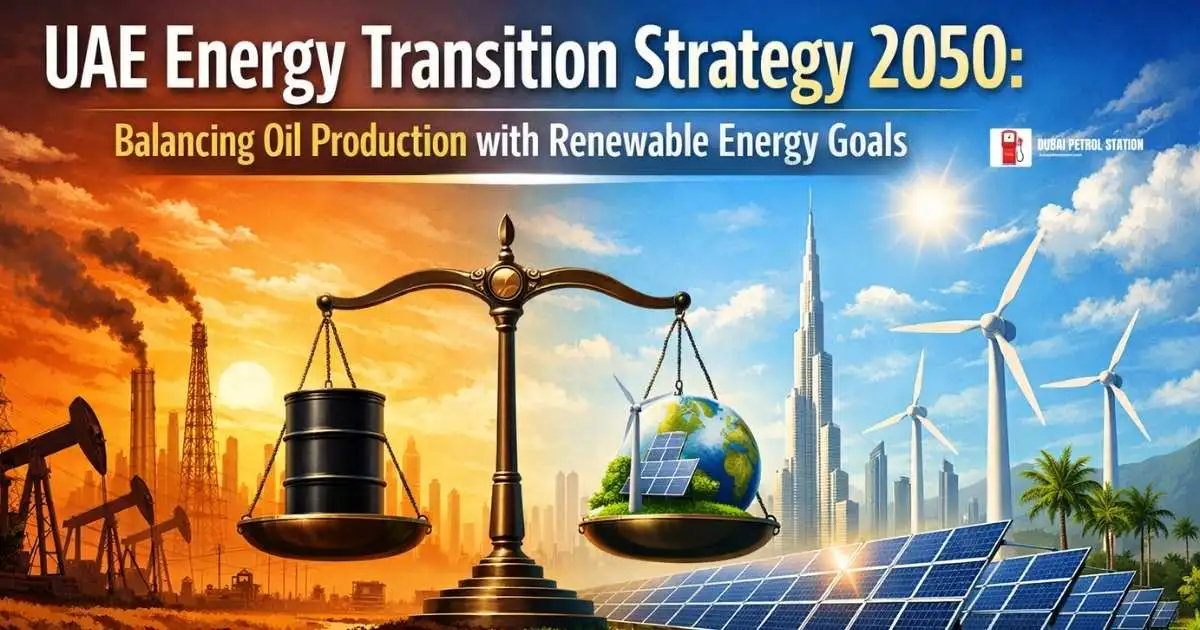
The UAE’s Energy Transition Strategy
The UAE is one of the first countries in the Middle East to adopt a comprehensive climate strategy while maintaining a strong hydrocarbon sector.
Key national climate goals
- Net-zero emissions nationwide by 2050
- Expansion of renewable energy capacity
- Development of hydrogen and low-carbon fuels
- Deployment of carbon capture and storage technologies
The UAE government sees carbon capture as a “bridge technology” that allows oil and gas producers to reduce emissions during the energy transition.
See How ADNOC’s $150 Billion Investment is Transforming the UAE Petroleum Industry by 2027.
What Is Carbon Capture Technology?
Carbon Capture, Utilization, and Storage (CCUS) involves capturing carbon dioxide from industrial facilities before it enters the atmosphere.
How the process works
- Capture – CO₂ is separated from industrial emissions.
- Transport – The captured CO₂ is moved through pipelines.
- Storage or utilization – The CO₂ is injected underground or used in industrial processes.
Benefits for oil-producing countries
- Reduces greenhouse gas emissions
- Extends the life of existing energy infrastructure
- Supports low-carbon fuel production
- Helps industries meet international climate targets
ADNOC’s Net Zero Strategy
ADNOC has positioned itself as one of the lowest-carbon oil producers globally, with an upstream carbon intensity of around 7 kg CO₂e per barrel of oil equivalent.
Core pillars of ADNOC’s decarbonization plan
- Carbon capture expansion
- Electrification using solar and nuclear energy
- Energy efficiency improvements
- Near-zero methane emissions by 2030
The company has allocated more than $23 billion for decarbonization and low-carbon technologies.
“Developing cost-effective carbon capture technologies is critical to achieving our net-zero ambition.”
Major Carbon Capture Projects in the UAE
1. Al Reyadah Carbon Capture Facility
Al Reyadah is the first commercial-scale CCUS facility in the Middle East.
| Feature | Details |
|---|---|
| Location | Abu Dhabi |
| Capacity | ~800,000 tonnes of CO₂ per year |
| Industry Source | Emirates Steel |
| Purpose | Inject CO₂ into oil reservoirs for enhanced recovery |
This project demonstrated that large-scale carbon capture is technically feasible in the Gulf region.
2. Habshan Carbon Capture Project
The Habshan CCUS project is one of the largest new carbon capture initiatives in the region.
| Project Element | Details |
|---|---|
| Location | Habshan gas processing plant |
| Capacity | ~1.4–1.5 million tonnes CO₂ per year |
| Technology | Underground geological storage |
| Strategic Goal | Expand ADNOC’s carbon capture network |
The project will significantly increase carbon capture capacity in Abu Dhabi.
3. Integrated Carbon Management Network
ADNOC is building a regional carbon management platform that connects:
- Industrial emission sources
- Carbon capture facilities
- CO₂ pipelines
- Underground storage sites
This integrated system will allow the UAE to scale carbon capture across multiple industries.
Carbon Capture Targets and Progress
ADNOC has dramatically expanded its ambitions in recent years.
Key targets
| Target Year | Goal |
|---|---|
| 2030 | Capture 10 million tonnes of CO₂ annually |
| 2030 | Reduce emissions intensity by 25% |
| 2030 | Achieve near-zero methane emissions |
| 2045 | Net-zero operational emissions |
Capturing 10 million tonnes of CO₂ annually is equivalent to removing more than 2 million cars from the road.
Why the Gulf Region Is Ideal for Carbon Capture
Experts say the Gulf has several advantages for CCUS deployment.
Natural and economic advantages
- Large underground geological storage formations
- Concentrated industrial zones
- Existing pipeline infrastructure
- Strong government investment
These factors make the UAE and the wider Middle East a “sweet spot” for carbon capture expansion.
Role of Carbon Capture in the UAE Oil Industry
Carbon capture is becoming essential for oil companies operating in climate-conscious global markets.
Key industry impacts
- Enables low-carbon oil production
- Supports blue hydrogen and low-carbon ammonia
- Helps meet ESG requirements for investors
- Maintains competitiveness in international energy markets
For ADNOC, CCUS also allows oil reservoirs to be used for CO₂ storage and enhanced oil recovery, increasing efficiency while reducing emissions.
Challenges and Future Outlook
While promising, carbon capture faces several challenges.
Key challenges
- High project costs
- Infrastructure development
- Long-term storage monitoring
- Scaling technology globally
However, continued investment and partnerships are helping the UAE accelerate deployment.
The country is increasingly positioning itself as a global hub for low-carbon energy technologies.
Quick Long-Tail Keywords Table
| Long-Tail Keyword | Search Intent |
|---|---|
| carbon capture technology UAE oil industry | Informational |
| ADNOC carbon capture projects Abu Dhabi | Industry research |
| UAE net zero 2045 ADNOC strategy | Energy policy |
| CCUS projects Middle East energy transition | Global energy analysis |
| ADNOC sustainability strategy 2030 | Corporate sustainability |
FAQs
-
What is ADNOC’s net-zero target?
ADNOC aims to achieve net-zero emissions from its operations by 2045, five years earlier than many global oil companies.
-
How much carbon will ADNOC capture by 2030?
The company plans to capture 10 million tonnes of CO₂ annually by 2030 through multiple carbon capture projects.
-
What is the Al Reyadah carbon capture project?
Al Reyadah is the first large-scale carbon capture facility in the Middle East, capturing around 800,000 tonnes of CO₂ per year from industrial emissions.
-
Why is carbon capture important for oil companies?
Carbon capture helps oil producers reduce emissions, meet climate regulations, and maintain energy production during the global transition to cleaner energy.
Conclusion
Carbon capture technology is transforming the UAE’s oil industry. Through large-scale investments and ambitious targets, ADNOC is positioning itself as a global leader in low-carbon hydrocarbon production.
By expanding CCUS capacity, electrifying operations, and investing in clean energy, the company is moving toward net-zero operations by 2045 while continuing to supply energy to the world. The UAE’s approach demonstrates that traditional energy producers can play a critical role in the global climate transition.



Leave a Reply