

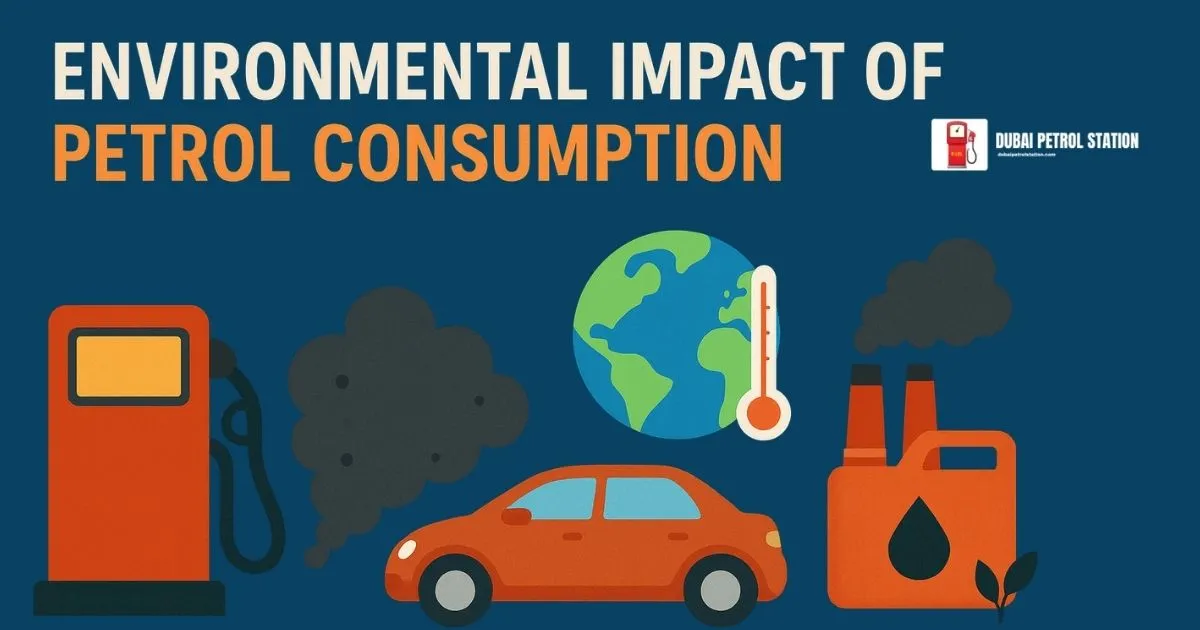
Petrol plays a paramount role in modern life. It powers our daily commutes, keeps businesses running, and supports global transport. But behind the convenience lies a long list of environmental and health impacts that often go unnoticed. Understanding these effects isn’t just for scientists or policymakers — it helps ordinary people make smarter, cleaner choices every day.
Below is a clear, easy-to-read breakdown of how petrol affects the world around us, supported by well-known organizations such as the World Health Organization (WHO), the Intergovernmental Panel on Climate Change (IPCC), the U.S. Environmental Protection Agency (EPA), and the U.S. Energy Information Administration (EIA).
Must Check: Petrol Station Near Me in Dubai1. What Really Happens When Petrol Burns
Every time petrol burns in an engine, it releases a mix of gases and particles — things like CO₂, nitrogen oxides, carbon monoxide and tiny soot particles. These byproducts affect both the air we breathe and the global climate. Even before petrol reaches your vehicle, pollution happens during drilling, refining and transporting fuel.
2. Petrol’s Role in Climate Change
Transport emissions have been rising for years, and petrol-powered vehicles contribute a major share of that growth. According to the IPCC, the transport sector is one of the biggest and fastest-growing sources of global greenhouse gases, making it a key target for climate action.
3. The Hidden Health Costs
Air pollution is often invisible, but its effects are not. The WHO links exposure to pollutants like PM2.5 and NO₂ — both commonly produced by petrol vehicles — to heart disease, stroke, lung cancer, and chronic respiratory issues. Millions of premature deaths worldwide are tied to air pollution each year.
4. Water Pollution and Oil Spills
Petrol doesn’t just threaten the air. Leaks and spills from pipelines, storage tanks or transport can contaminate rivers, oceans and groundwater. These accidents can destroy aquatic habitats and take years — sometimes decades — to fully recover from. EPA research highlights how persistent and damaging petroleum contamination can be.
5. Damage to Wildlife and Ecosystems
From clearing land for drilling sites to the noise and waste generated during production, the entire oil lifecycle affects ecosystems. Wildlife habitats are fragmented or destroyed, and sensitive species often struggle to survive near extraction or refining areas.
You May Like: CAFU Fuel Delivery Dubai: The Ultimate Guide to On-Demand Refueling6. The Full Story: Petrol’s Lifecycle Footprint
When most people think about pollution from petrol, they think of exhaust pipes. But the lifecycle impact — extraction, refining, transport and final use — is much larger. Studies by the EIA show that the full footprint of petrol includes emissions at every stage, not just what comes out of a vehicle.
7. Local Air Pollution vs. Global Climate Impact
Petrol creates two kinds of problems:
- Local problems like smog and poor air quality that affect people immediately.
- Global problems like climate change from CO₂ emissions, which build up over time.
Both need different solutions — and both matter.
8. Cleaner Alternatives to Petrol
There isn’t a single perfect alternative, but several options significantly reduce environmental impact:
Electric Vehicles (EVs)
- Zero tailpipe emissions
- Greatest benefits as the electricity grid becomes cleaner
Biofuels
- Renewable and lower-emission when produced sustainably
- Can compete with land use and food production if managed poorly
Green Hydrogen
- Ideal for heavy transport and long distances
- Cleanest when produced using renewable power
Public Transport & Cycling
- Cost-effective, healthy and instantly reduces emissions
9. Policies and Technologies Making a Difference
Governments and businesses around the world are using a mix of strategies to cut down on petrol-related pollution, such as:
- Stricter fuel and vehicle emission standards
- Incentives for EVs and charging networks
- Public transport expansion
- Better spill prevention and rapid response systems
10. The Economic Side of Petrol Pollution
Air pollution increases healthcare costs, reduces productivity and creates long-term financial burdens. Cleaning up spills is extremely expensive, and climate-related damages grow each year. When environmental costs are included, petrol becomes far more expensive than it appears at the pump.
11. How Much CO₂ Does Petrol Actually Produce?
A simple estimate:
Burning 1 litre of petrol produces about 2.3 kg of CO₂.
A car using 8 L/100 km emits around 184 g of CO₂ per kilometre, not counting upstream emissions.
12. Real-World Examples
Historical tanker incidents and pipeline leaks show how devastating oil spills can be. These accidents often leave long-term marks on coastal communities, wildlife and local industries like fishing and tourism.
13. What Individuals Can Do
- Drive smoothly and maintain your vehicle
- Choose public transport or carpooling when possible
- Consider an EV or hybrid for your next vehicle
- Reduce unnecessary trips and plan routes efficiently
14. What Governments and Businesses Must Do
Governments can alleviate pollution by building better public transport, investing in charging networks, and enforcing stricter emissions rules. Businesses can electrify fleets, switch to more efficient logistics and support sustainability programs.
15. How to Track Progress
To really understand improvements, governments and cities can monitor:
- PM2.5 and NO₂ levels
- Transport-sector CO₂ emissions
- EV adoption rates
- Number and severity of oil spills
FAQ
How does petrol contribute to air pollution?
Petrol releases fine particles and gases that worsen air quality and lead to major health issues like heart and lung disease.
Are electric cars really cleaner?
Yes, 100% sure, Electric cars produce no tailpipe emissions. Their overall environmental benefit improves as power grids shift toward renewable energy.
Last Points
Petrol has powered global development for decades, but its environmental and health costs are becoming increasingly clear. By choosing cleaner transport options, supporting modern policies, and adopting smarter technology, we can significantly reduce these impacts — without sacrificing mobility or economic growth.



Leave a Reply